
10 Ways to Help Kids Do Hard Things
We live in a society that is obsessed with comfort. From the “smart” devices that deliver our every wish at the touch of a button, to the frighteningly broad spectrum of automation available to us through the advent of artificial intelligence, we humans are always pursuing ways to make life more luxurious for ourselves with the least amount of effort possible.
While we certainly all benefit from some of these technologies and societal advancements, research clearly shows that we are happier and healthier when we make it a practice to regularly do hard things. Let’s be honest: the last time you binge-watched that latest TV show, or opted for a triple decker chocolate dessert instead of the Cobb salad, did you feel accomplished and energized after the fact? Motivated to take on new goals and pursuits? Me neither.
The truth is, the moments when we struggle, strive, and even suffer in life are the moments we feel most alive.
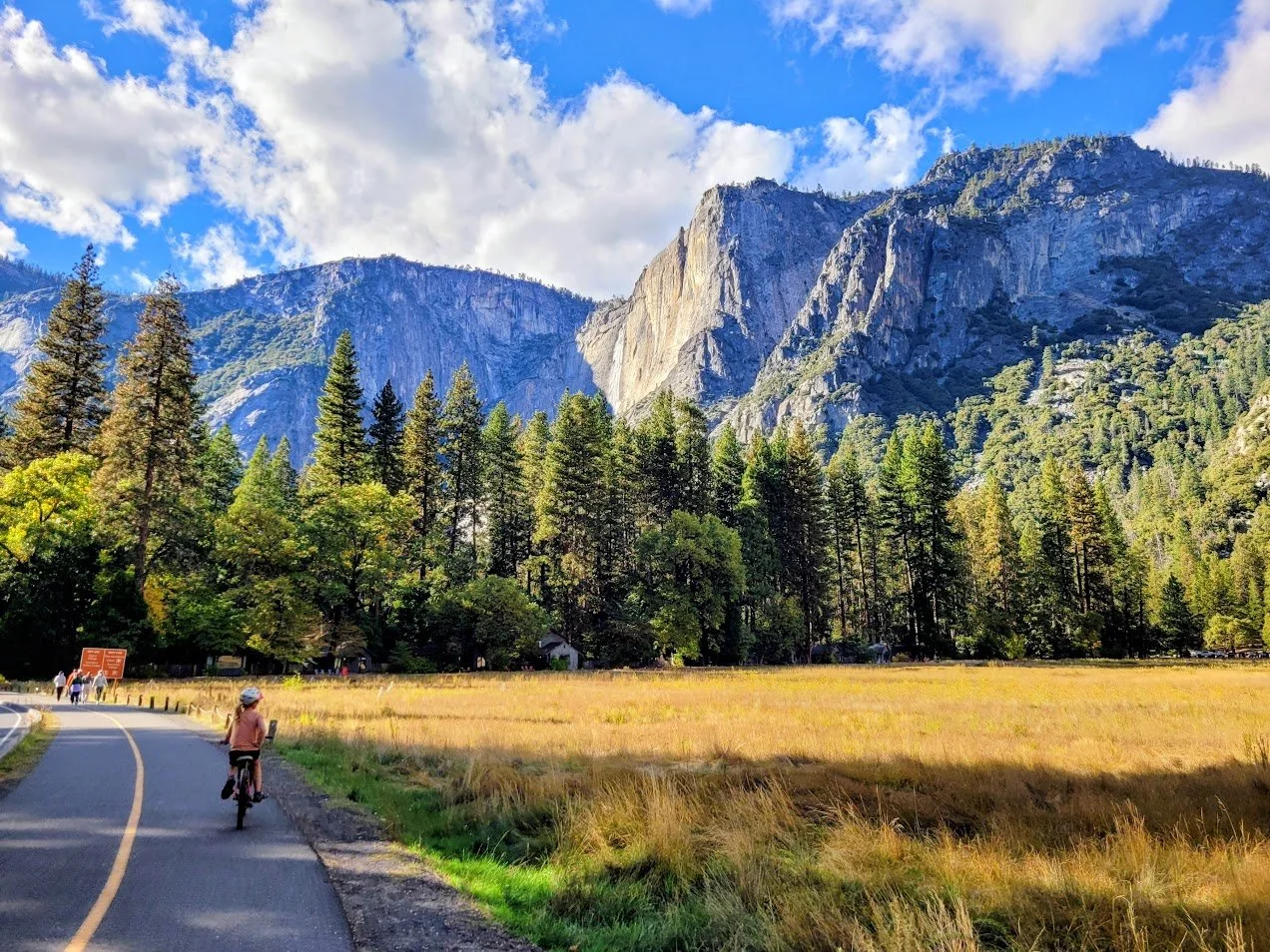
Cycling in Yosemite National Park.
And that feeling of being alive…I want to share that with my children. That sweet satisfaction of aching legs and burning lungs when you finally pedal to the peak of the mountain. The thrill of that adrenaline rush when you jump into the frigid waters of a high alpine lake. That deep sense of accomplishment when you finally reach the campsite after an arduous hike. These are not moments we can experience if we spend our lives staring at screens or lounging on cushions.
Michael Easter writes in his book The Comfort Crisis: “A radical new body of evidence shows that people are at their best—physically harder, mentally tougher, and spiritually sounder—after experiencing the same discomforts our early ancestors were exposed to every day. Scientists are finding that certain discomforts protect us from physical and psychological problems like obesity, heart disease, cancers, diabetes, depression, and anxiety, and even more fundamental issues like feeling a lack of meaning and purpose.”
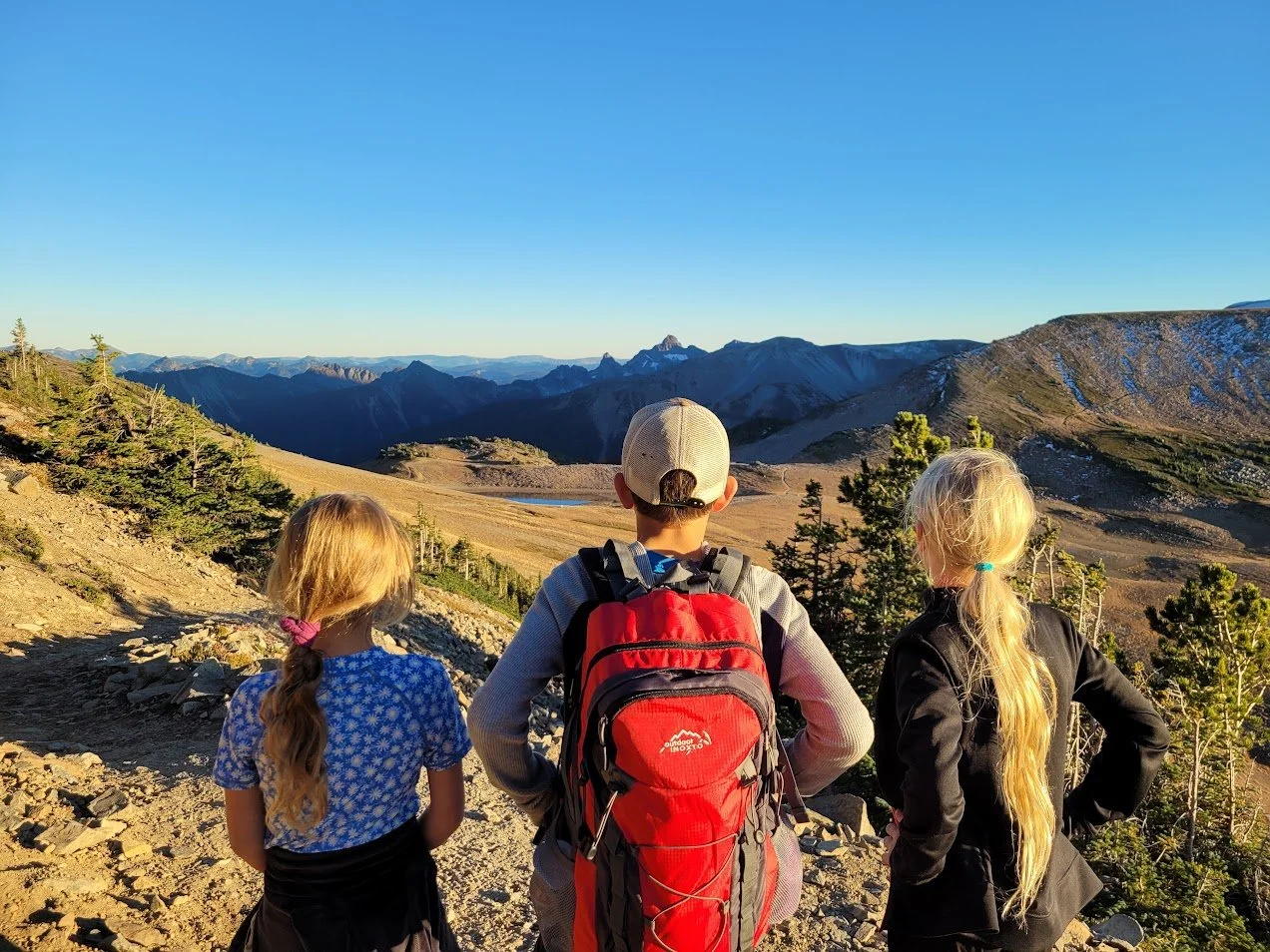
On an eight-mile hike in Mount Rainier National Park.
The evidence is there. And of course we want to live healthy, happy lives. We certainly want that for our children as well. But how do we get our kids on board with this idea of discomfort? How do we make doing hard things attractive to them? After all, the world is constantly pushing them toward ease and mindless entertainment. Our family is still a work in progress, but we have learned a few things over the last thirteen years of outdoor excursions as a family.
Today, I have some suggestions I hope you’ll find helpful.
1. Create A Family Culture of Adventure
The other night over dinner, I asked our kids what they liked best about our family. All four of them answered pretty much the same way, “My favorite thing about our family is that we go on fun adventures and trips together.” Their response warmed my heart! And it made me thankful that we’ve chosen what, in many ways, has been the harder path of bringing our kids with us on all our forays into the great outdoors.
Our first backpacking trip with kids occurred when our first son was four months old. Was it easy to take an infant into the wilderness? No. But it was worth it. Every weekend, we were out hiking with our kids in backpack carriers, running in our neighborhood while pushing strollers, or exploring our local trails on bikes with a child trailer in tow. This became our way of life, and our kids embraced it. They didn’t know anything different. Even as our second, third, and fourth children were born, we kept going outdoors and taking our kids along for the ride. They’ve grown up in this family culture. It’s part of their identity.
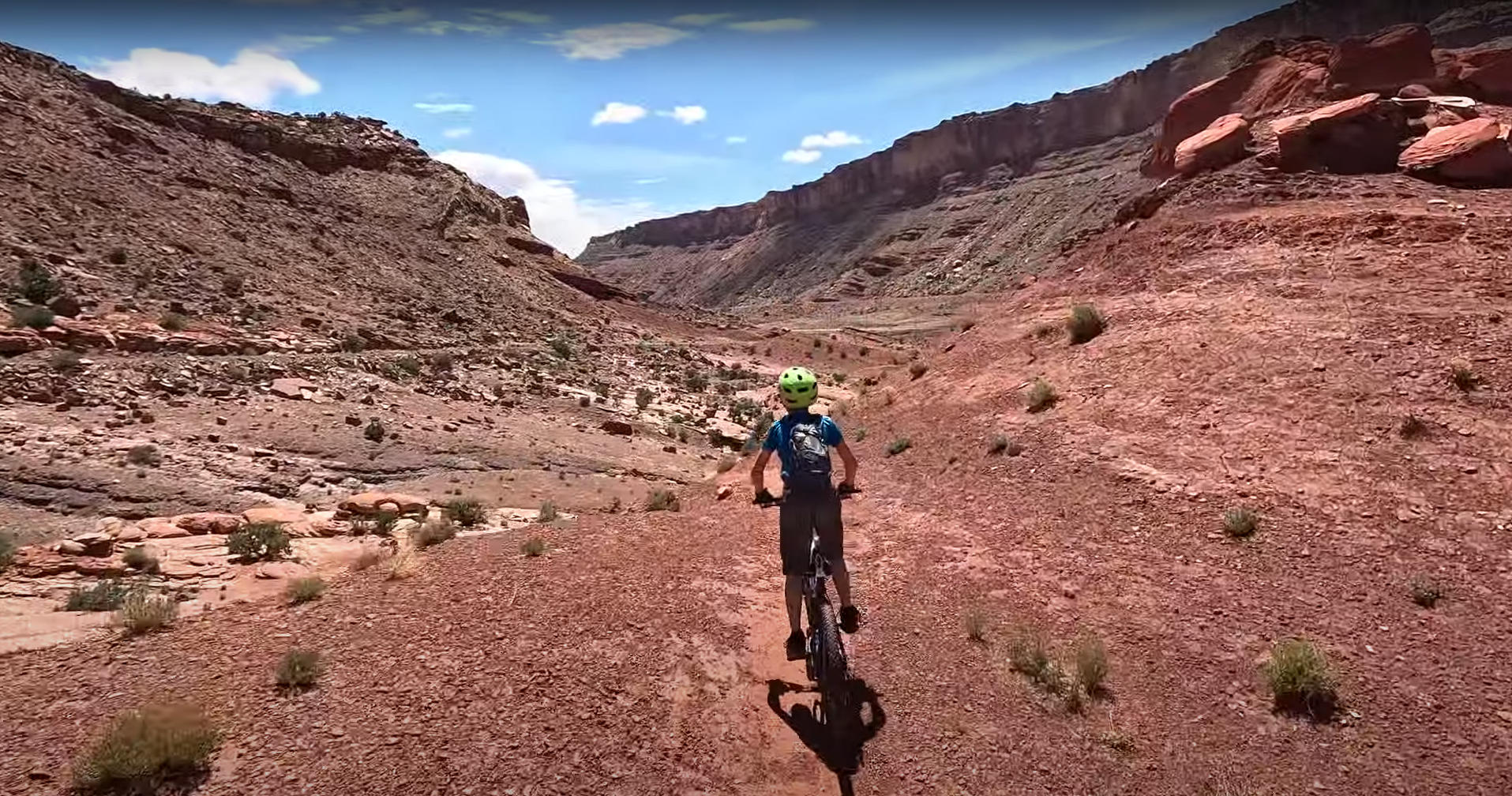
Mountain biking in Moab, Utah.
2. Involve Them in the Planning
One way to get your kids excited about challenging adventures is to invite them to help you plan it out. We’re currently planning a 333-mile bikepacking trip on the Great Allegheny Passage trail for this fall. I purchased a trail guide and invited my daughters one evening to sit on the couch with me and scope out a trip itinerary together. We had a great time, evaluating distances between campgrounds and noting all the historical sites and attractions along the way. This kind of involvement creates a sense of ownership with kids, and they start to get excited as they anticipate the trip.
3. Get Creative About Fun Rewards
We have learned the hard way that forgetting to bring snacks on any excursion longer than one hour can result in cranky, disheartened kids. As a general rule, we don’t eat a lot of processed foods like chips, candy, crackers, etc., so these treats are extra special when used for outings. Our kids love pretzels, beef jerky, trail mixes, dried fruits, and hard candy. Before a longer outing, such as a three-day backpacking trip, I’ll purchase some of these items in bulk at Costco and then portion them out into Ziploc bags for each child. Those snacks then go in the top of their backpacks for easy access, and they get to pick and choose what they’re in the mood for along the way.
If you’re going to ask your kids to do hard things, make sure they’re fueled properly for the adventure before you head out the door.
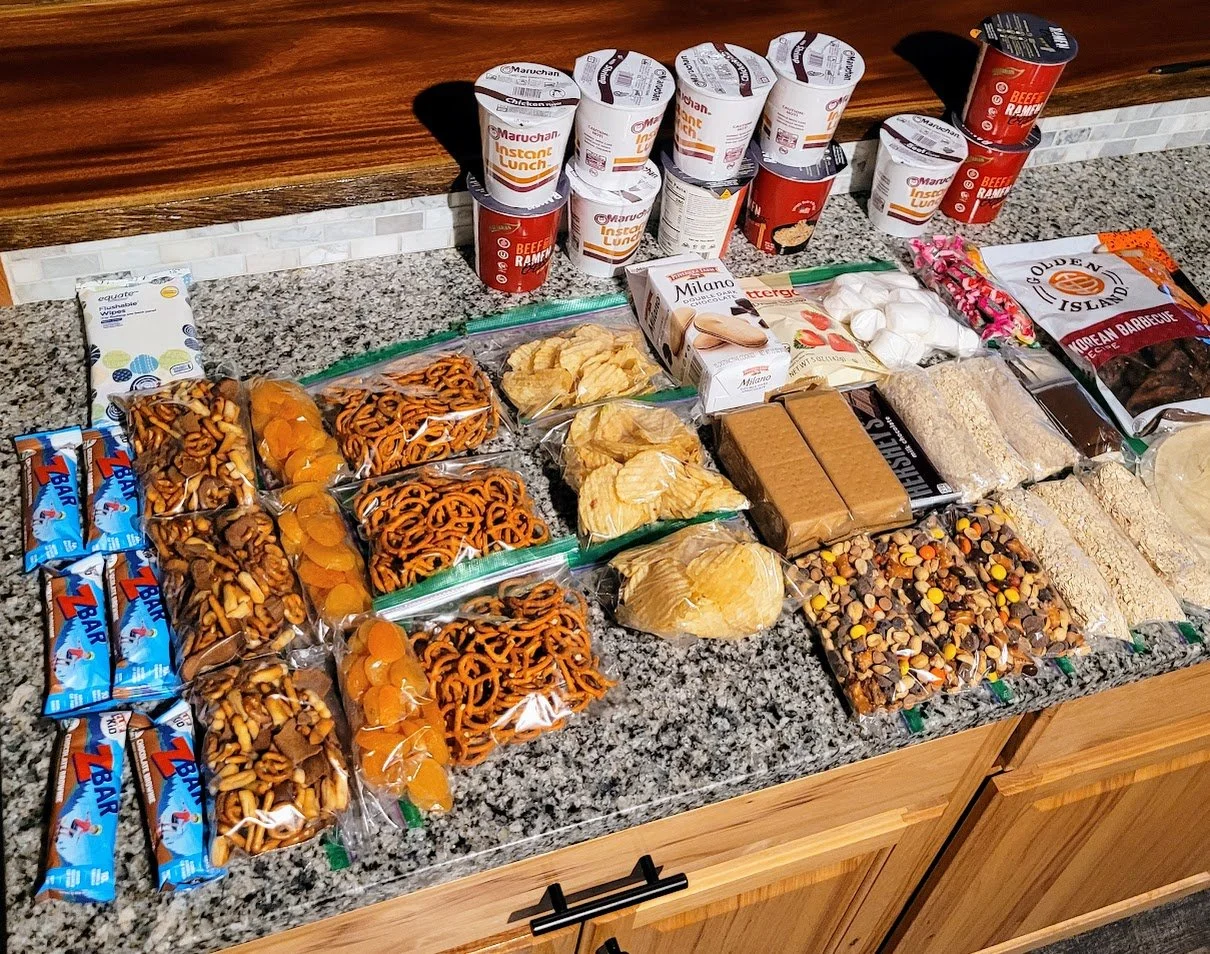
Portioning out food for a three-day girl’s backpacking trip.
4. Play Games to Pass the Time
When the going gets tough, it helps to take kids’ minds off of the steep terrain or the hot rays of the sun. One of the best ways we’ve found to achieve this is by playing games to pass the time. A solid favorite in our family is the Animal Game, where one person thinks of an animal, and then the rest of the family asks questions that require “yes” or “no” answers until they guess the answer.
Not only is this game fun and entertaining when you are trying to pass the time and get miles under your feet (or wheels), but it is also educational. As a result of playing this game over the years, my kids now know that weasels and stoats belong in the Mustelid family, and that llamas and guanacos, members of the camelid family, have dog-like pads on their feet, not hooves. They’ve learned about caracals, springboks, markhors, and echidnas.
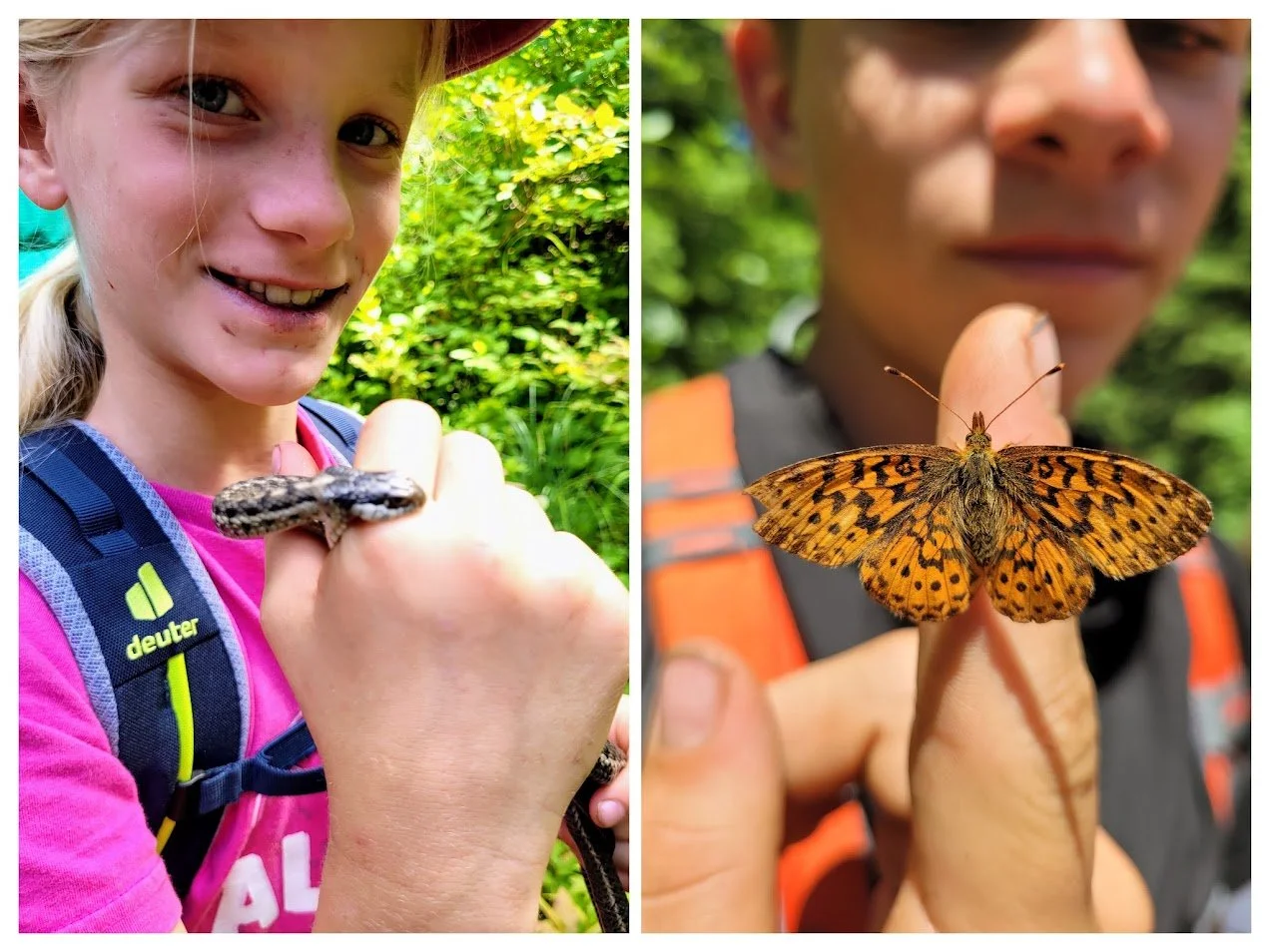
Fun discoveries in the backcountry.
Another game we enjoy is the Animal Letter Game, in which someone chooses a letter of the alphabet, and then everyone takes a turn trying to think of an animal whose name begins with that letter. The person who comes up with the most names gets to choose the letter for the next round. This is another great educational game, because while your kids may not know a lot of animal names starting with the letter B, for example, after a dozen times of playing this game, they’ll be throwing out bongo, Bactrian camel, and black mamba!
Lastly, Animal Signs is an entertaining way to help your kids be more observant of nature around them. In this game, people look for signs of life along the trail, whether that be a caterpillar, a feather, coyote scat, a mallard family, or a deer track. Each time you find evidence of animal signs, you get a point. You can adjust the difficulty level of this game as well, making it so that toddlers can count anything they find, but older kids can only count a particular sign once (for example, if they see two black-capped chickadees, they can only count one of them as a point).
5. Encourage Them Along the Way
Encouragement is such an important part of taking on hard challenges. As adults, we benefit from friends who will cheer us from the sidelines, and our children are no different. If anything, it’s more difficult for kids to take the long view and see the value of discomfort at their young ages, so being intentional with this matters.
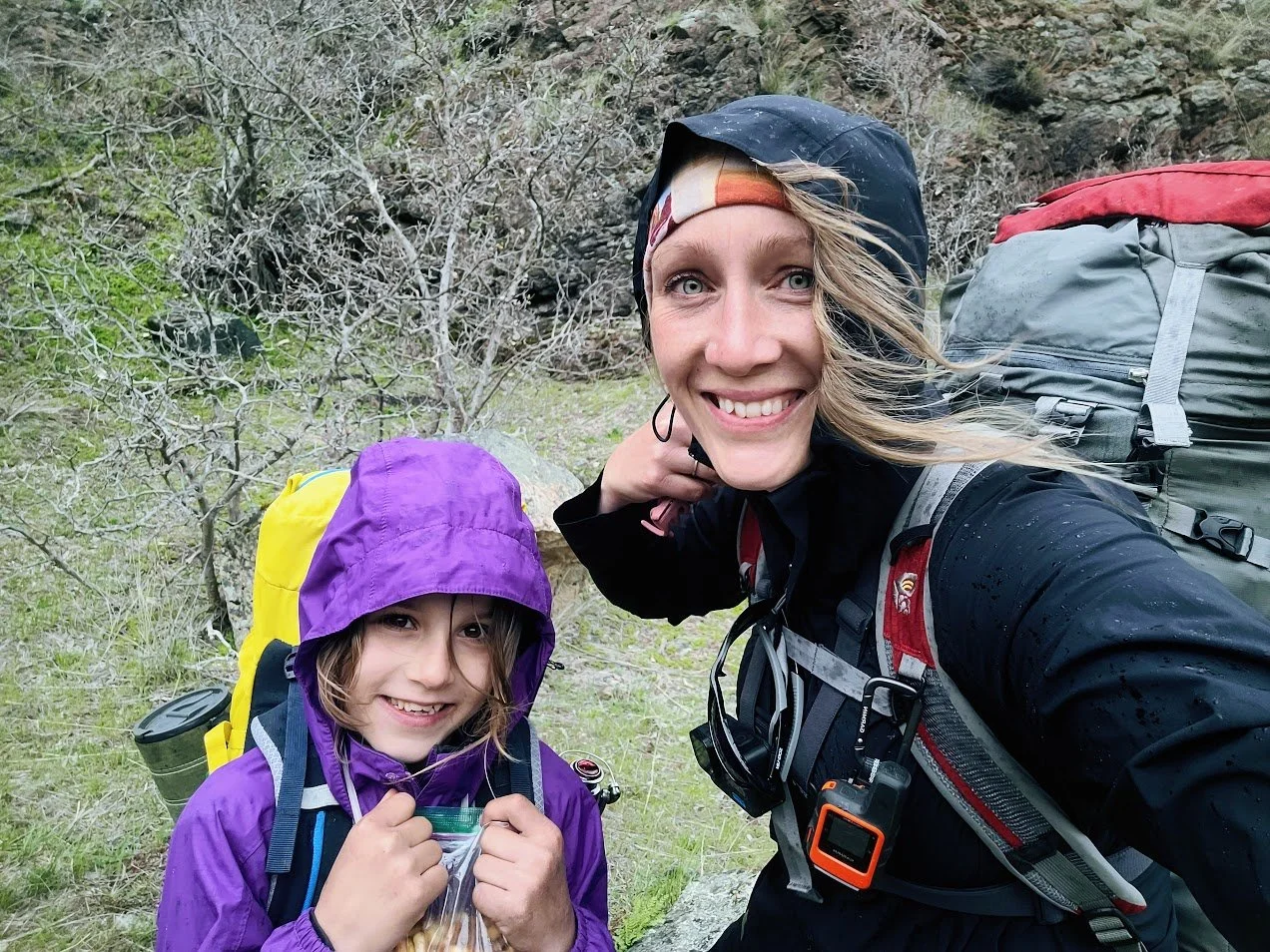
Getting rained and hailed on, but still smiling!
When my kids are struggling, I’ll remind them of the end goal. In the short term, that end goal might be a campsite and a delicious meal, or it might be a mountaintop view and smoothies on the way home. I’ll remind them how satisfying those things will be because they worked hard for them, and I’ll tell them how proud I am of them for pushing through even when it’s hard. But I’ll also point to the long term, bigger goal, which transcends the campfires and the ice cream cone. Doing hard things makes one stronger and more resilient to take on bigger challenges. It helps you grow. As Theodore Roosevelt said, “Work hard at work worth doing.” Or, to borrow from perhaps a less substantial source, I tell them, “Remember what Master Shifu said in Kung Fu Panda? ‘If you only do what you can do, you will never be more than you are right now.’”
6. Make Sure They Have the Right Gear
It almost goes without saying, but make sure your kids have the proper gear that fits them and their stage of development. I’m often surprised by how many times I’ve observed a youngster struggling with an ill-fitting pack on a backpacking trip. When you’ve enjoyed the experience of using the right gear that fits your frame and feels comfortable over many miles, you understand the value of this.
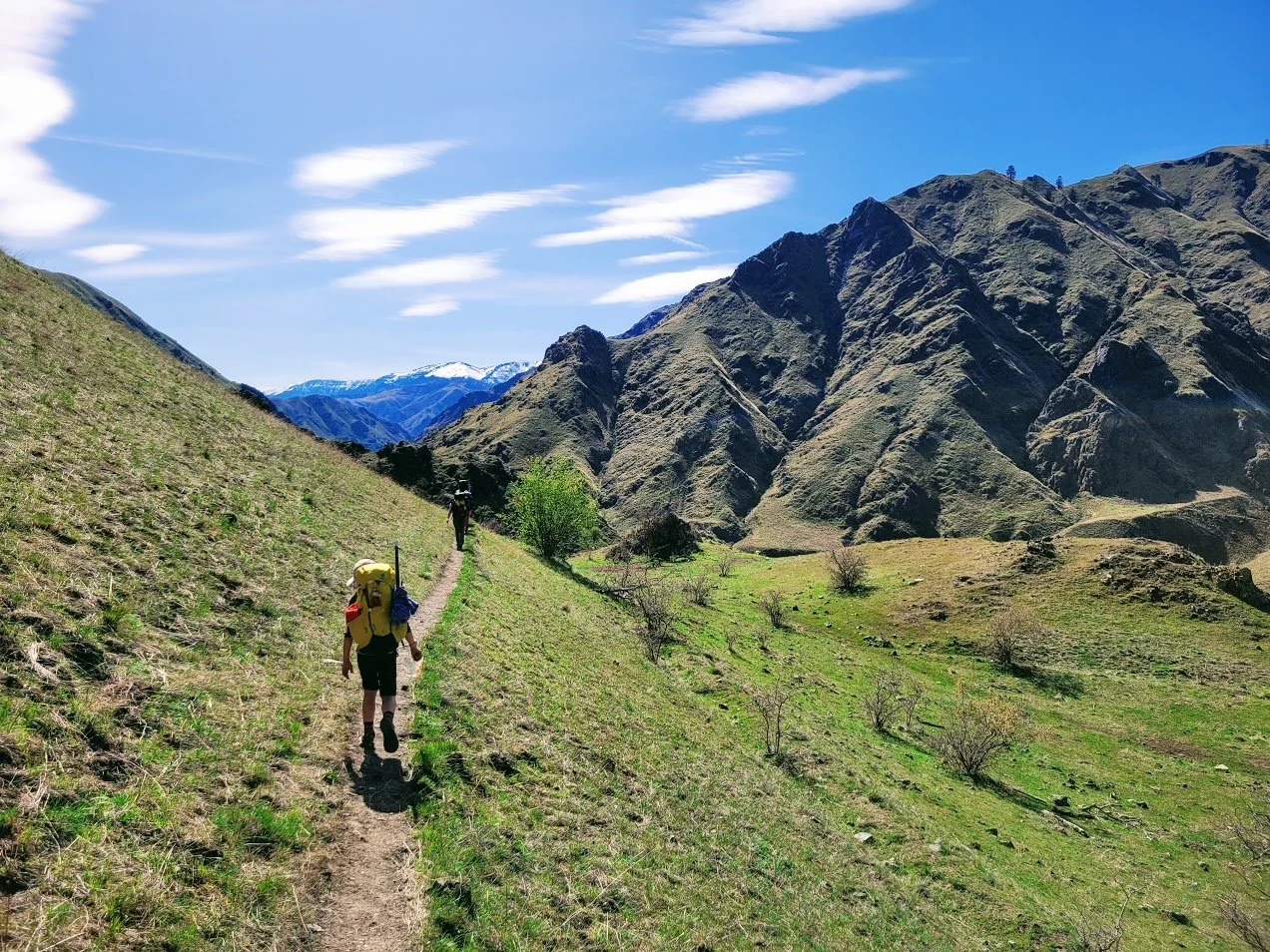
Bagging miles with beautiful views.
The same is true for bikes. In mountain biking, a bike that’s too large for you will cause discomfort and potentially even injury over time. It also causes you to be more susceptible to falls and crashes because you won’t have proper balance or control. This doesn’t mean you need to buy the most expensive gear out there; used or budget options are fine, but set your child up for success by getting them the right-sized gear.
7. Practice Gratitude
Besides playing games, another excellent pastime is to find things to be thankful for. While it may sound cliche, gratitude helps to shape our perspective–and our mindset when it comes to doing difficult things. It can be easy to focus on the negatives: sore feet, sweaty clothing, cold fingers, a heavy pack. Instead, encourage your child–and yourself!–to come up with a list of things for which you can both be thankful. Even simple things, like a beautiful glacier lily or a diligent honeybee, can be a source of appreciation and thankfulness if we have eyes to see the beauty of God’s creation.
Sometimes we’ll tell our kids stories of people who have overcome great hardships. Not too long ago, on a hike in Montana, we were slogging up a mountainside trail in the hot sun. Our youngest was complaining about the heat. For the next ten minutes, I shared a story of a Marine I had heard about years before. An avid outdoorsman, he’d had his legs blown off by an IED during the war in Iraq. In spite of this devastating disability, however, he had determined not to let that stand in the way of him living life to the fullest. By the end of the story, my daughter commented, “Wow. That makes me really thankful that I have legs to hike with.”
8. Increase Frequency Before Distance
If you start going on ten-mile hikes and forty-mile bike rides with your kids right out of the gate, it’s not going to end well. Years ago, a friend of ours became an overnight backpacking enthusiast, and for him, it was only worth going backpacking if the trip was going to be exceedingly challenging. Unfortunately, he convinced his 15-year-old daughter to accompany him on one of these trips. They hiked over 20 miles in the span of a few days AND summited a mountain with a few thousand feet of elevation gain. They were ill-prepared for the trip and returned with multiple injuries, including feet so abrased and blistered, they resembled raw hamburger in some places. After such a terrible first-time experience, his daughter adamantly declared she never, ever wanted to go backpacking again.
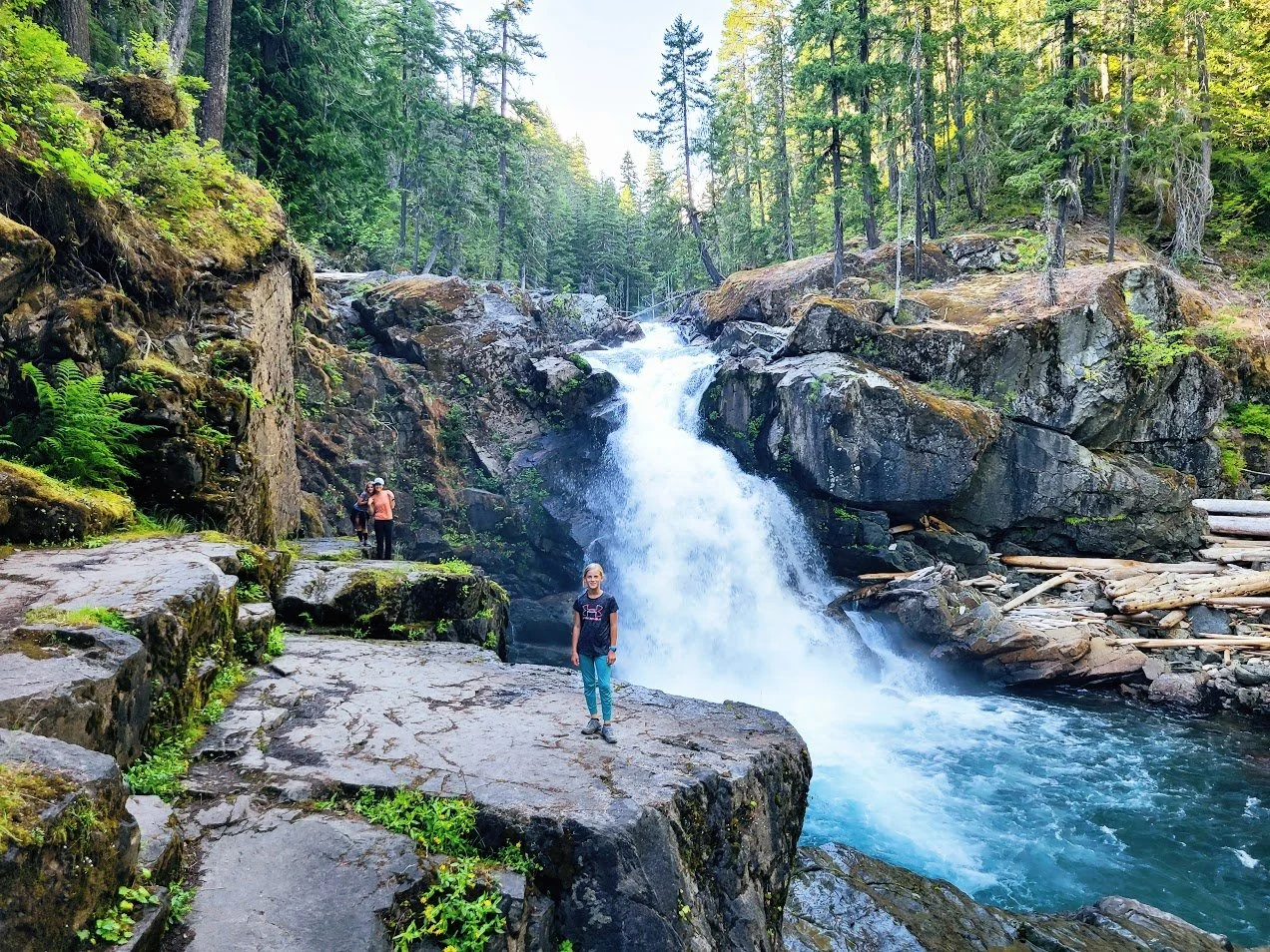
Hiking along the Ohanapecosh River.
This story is a good example of why it’s important to start small. In our experience, it’s better to first increase the frequency of outings (two or three times per week, perhaps) with low mileage. Then, as your kids adjust to that level of activity, you can start planning longer and more challenging adventures. Know their limits. Be patient with the process. Remember: the goal is to make them want to come back for more.
9. Set An Example for Them
Kids can spot hypocrisy from a mile off. If we are going to ask them to do hard things, it’s essential that we lead by example. This means that we must make an effort to model for them the principles we are attempting to teach. This can be really hard in the moment…when your child is whining, you just popped a bike tire, and it’s starting to rain. We’ve failed in these instances more times than I care to admit. But with the right heart attitude, these can be beautiful teaching moments. Let’s not waste them.
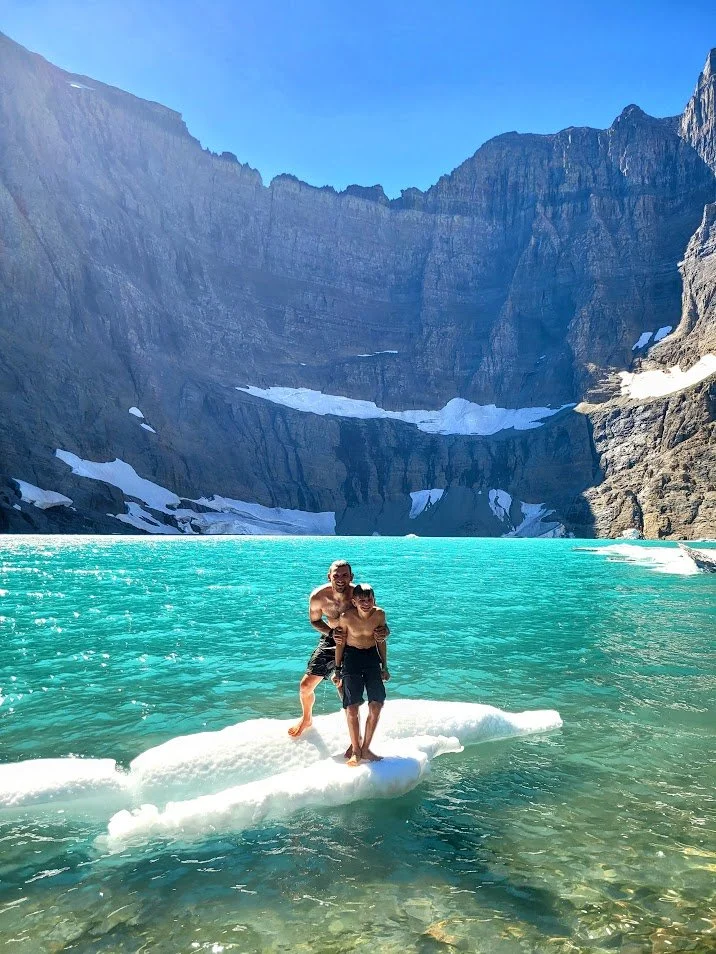
Doing hard things in Glacier National Park.
10. Celebrate the Finish with a Big Reward
Ending an excursion on a positive note is so helpful if you want your kids to become your fellow adventurers for the long term. Most of the time, for our family this looks like pizza and ice cream on the way home from a backpacking trip, or stopping for carne asada burritos at an authentic Mexican restaurant after a particularly arduous mountain bike trail. Whatever your jam, inspire your kids to keep pedaling (or hiking, or paddling) with the promise of a special reward for all their hard work.
They’ll appreciate it so much more for the effort they’ve invested.
And so will you.
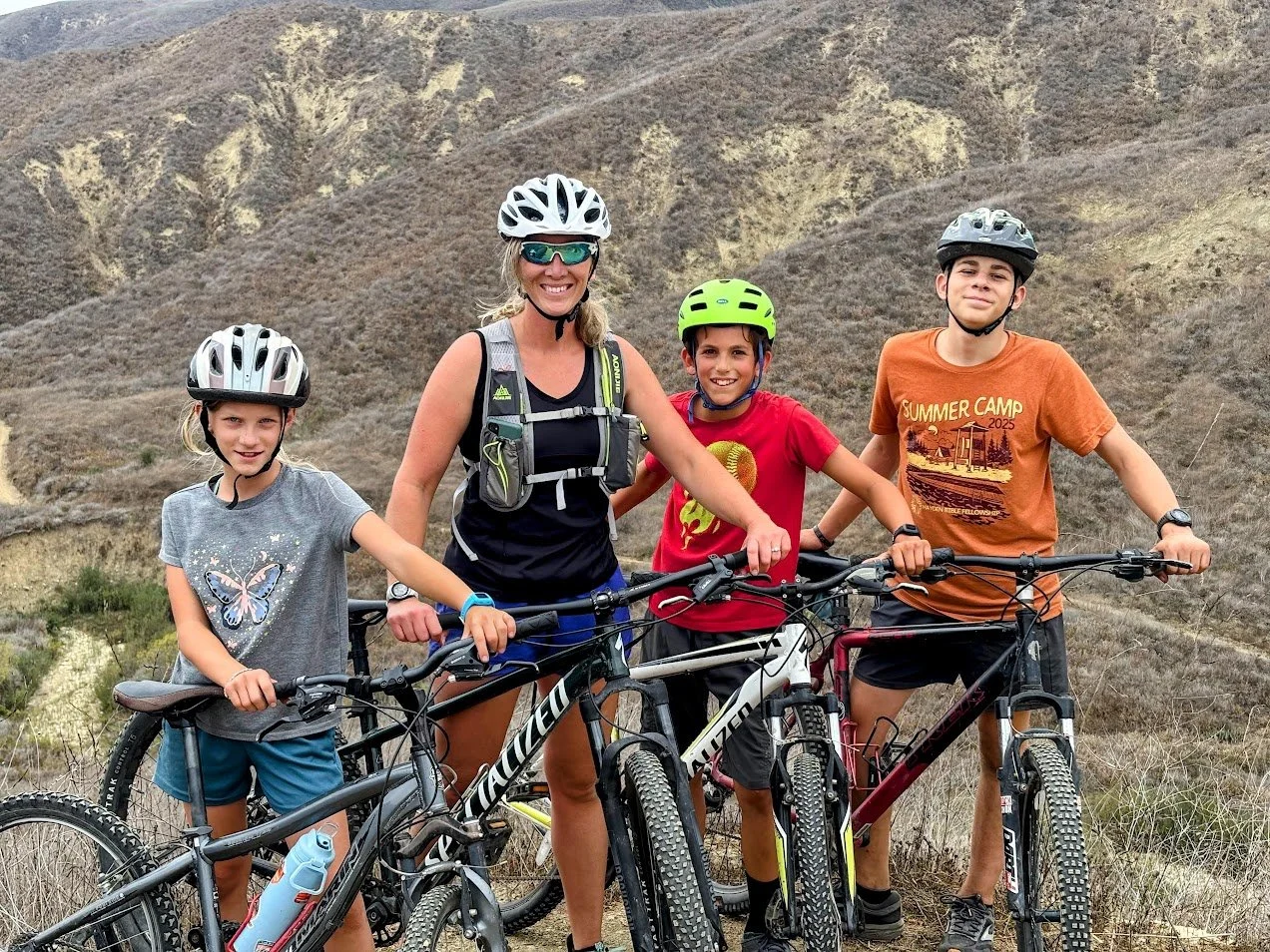
MTB fun in Harmon Canyon, California.