
Overnight Family Canoeing Adventure
While our family has spent many summers hiking, backpacking, cycling, mountain biking, and kayaking, we had one item on our bucket list we hadn’t managed to check off yet, and that was going on an overnight canoeing trip. A couple of weeks ago, we changed that when we planned a three-day, two-night canoe adventure to Priest Lake in northern Idaho.
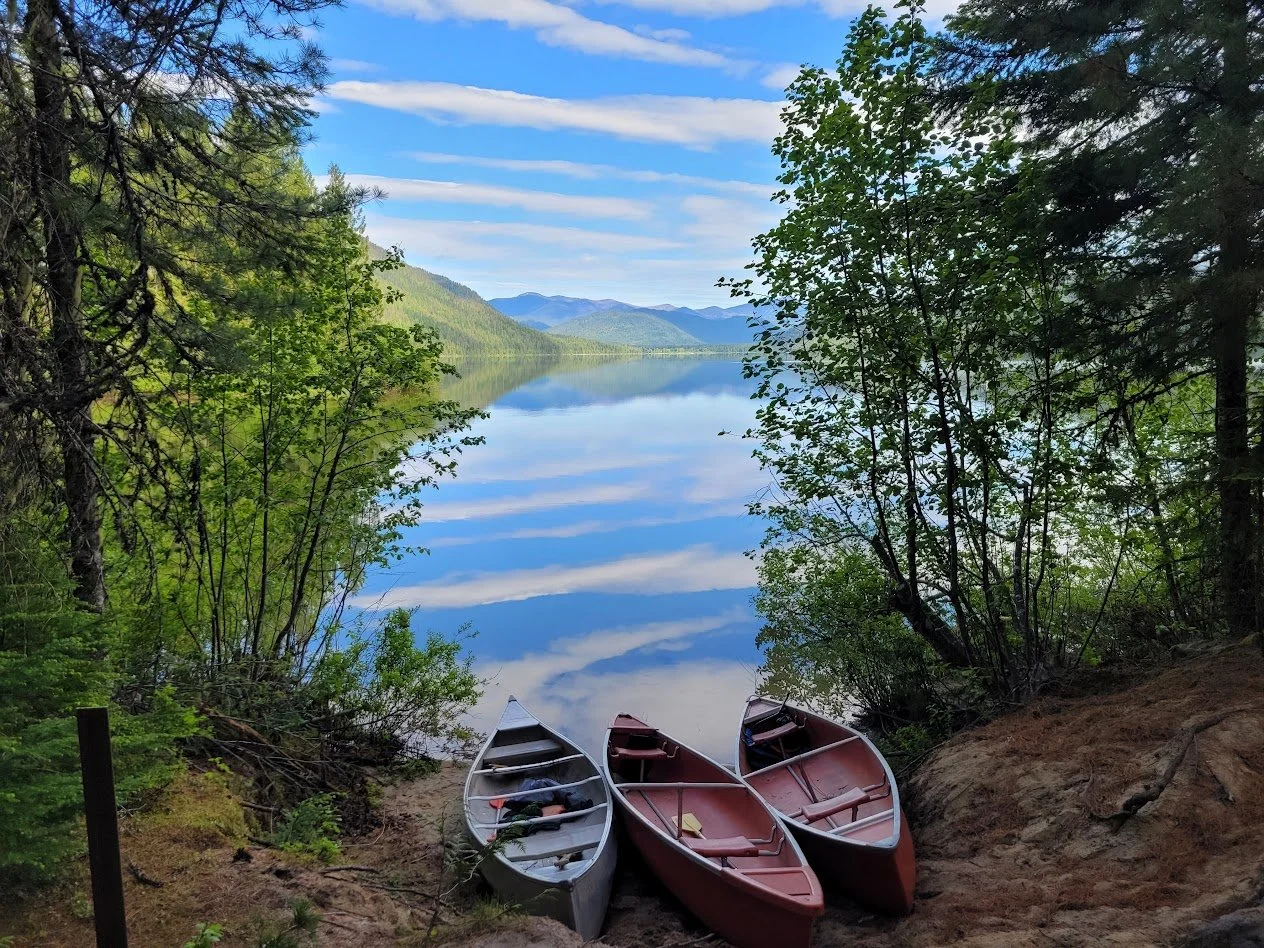
Upper Priest Lake, Idaho
The Destination
Priest Lake is remote, wild, and nestled into the mountains not far from the U.S./Canadian border. We’d visited it before on a number of different occasions, but only for camping or daytime excursions. The lake is actually made up of two lakes, which are known as Upper and Lower Priest. The two bodies of water are connected by a channel called “The Thoroughfare”, a 2.5-mile slow-moving river that flows north to south.
We used the Beaver Creek boat launch as our launching point, which had just enough space for a few vehicles with trailers to park. Since this was our first trip and we weren’t outfitted with a lot of dry bags for boat trips, we opted for a combination of black and yellow totes from Costco and contractor-grade black plastic garbage bags in which to stow our gear. We also had two waterproof dry boxes that we used for electronics, wallets, keys, etc. This system was a bit crude, but it actually worked really well, and we already had all of the items on hand!
This, I think, is an important lesson we have learned about outdoor adventure. While it may be nice to own high quality, brand-name gear that’s specifically designed for a particular purpose, it’s not always financially feasible. If we allow it, this scenario can keep us from diving in and enjoying an adventure, because we feel we have to wait until we have the “perfect setup.” Instead, we’ve learned to make do with what we have, and slowly upgrade our gear over time. Sure, using budget items might make the experience a little less comfortable, but in the end, we’re always glad we didn’t let the absence of the ideal gear stand in the way of making unforgettable memories.
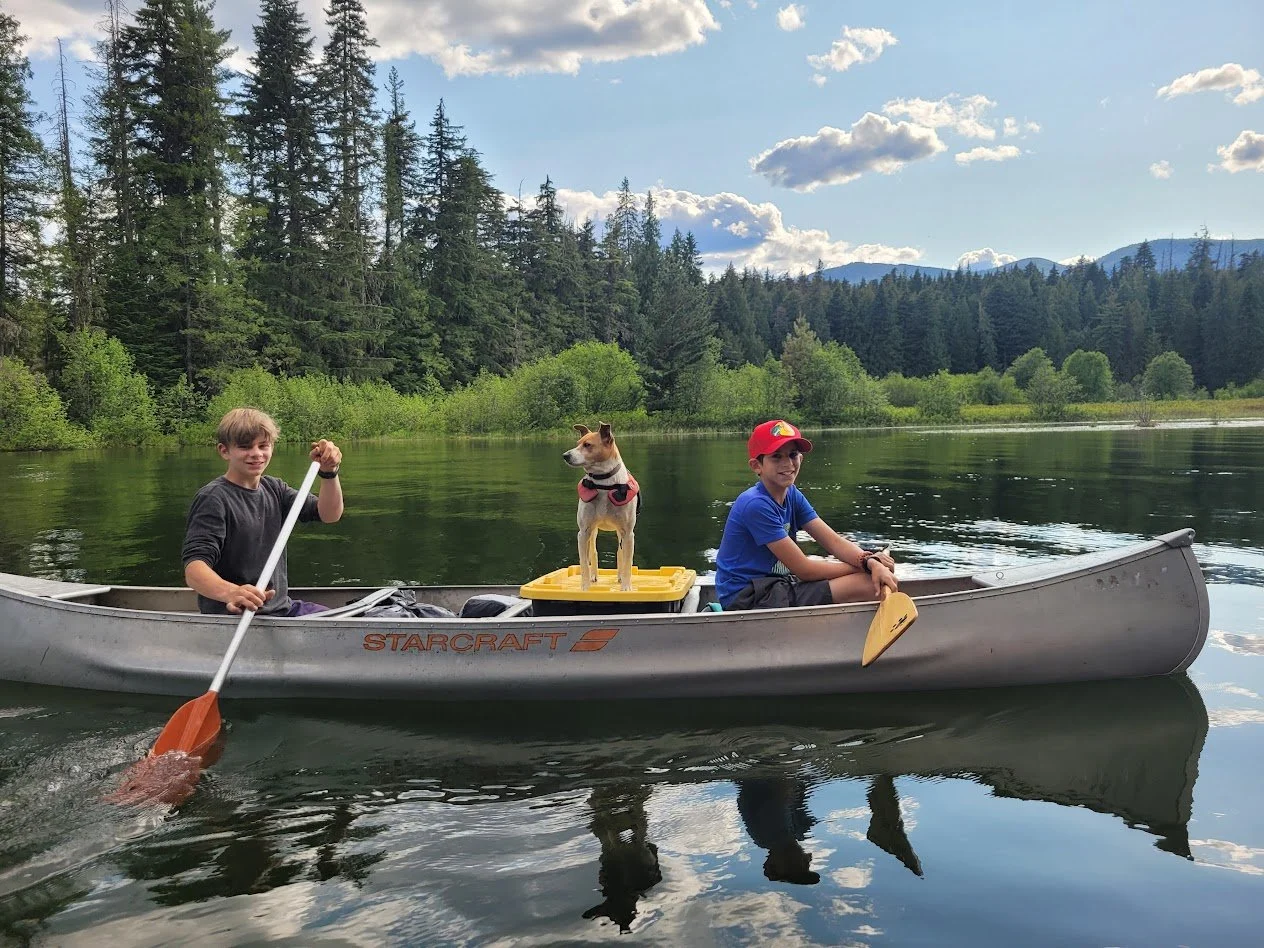
The maiden voyage of the Starcraft.
While we originally only owned two 15-foot Coleman canoes, our eldest son recently purchased a Starcraft aluminum canoe for himself, which put us at three canoes, the perfect number for our family of six. Since Huckleberry is our youngest and not a strong paddler quite yet, she and Ridge took the first canoe. Mountain Heart and I manned the second, and the boys shared the third.
In most situations, it’s a good idea to have the stronger paddler in the stern (the rear) and the other in the bow (the front). We stored all of our gear between the bow and the stern, centering it over the keel line for maximum stability. We also brought along our sturdy rat terrier, Jet, who loves to balance on the deck at the very front of the canoe, sniffing the wind and looking for little critters along the shoreline.
Paddling to Upper Priest
We pushed off from shore in the mid-afternoon. This launch was the only occasion on the entire trip where we had the pleasure of the wind at our backs, with the current pushing us in the direction we wanted to go. Sadly, the rest of the trip, we would struggle against the wind on all of our longer distances.
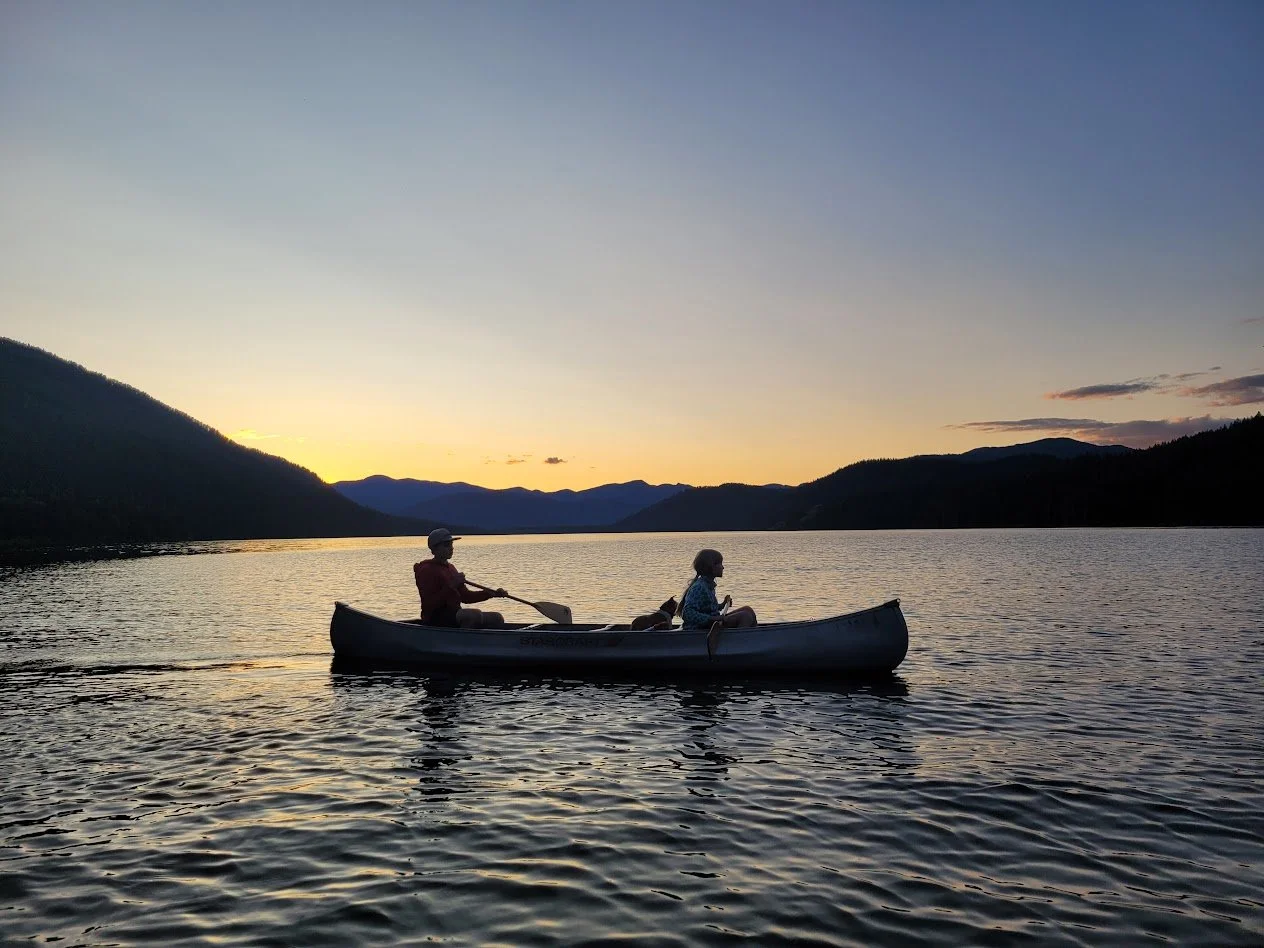
Evening colors and gentle waters.
Initially, we paddled northeast, as we had to maneuver around the jetty at the north end of the lake to reach the channel. Once we passed that point, the water became very still and calm. It took us two hours and ten minutes to reach Upper Priest. We stopped to see a cow moose and calf munching on the willows along the riverbend. Huckleberry was so excited to catch a glimpse of the moose, she stood up in the canoe, lost her balance, and fell overboard. Although soaked and a little chilled, she scrambled back on board and was a good sport about it. We sighted many types of waterfowl, a pair of eagles, a pair of ospreys, and numerous fish while making our way up the channel.
By the time we reached the lake, our shoulders and arms were aching from the rowing. We found a charming campsite on the eastern shore just north of the channel terminus; the campground featured a great group campsite as well, with well-kept pit toilets, established fire rings, and bear boxes. (Priest Lake is grizzly country, after all.)
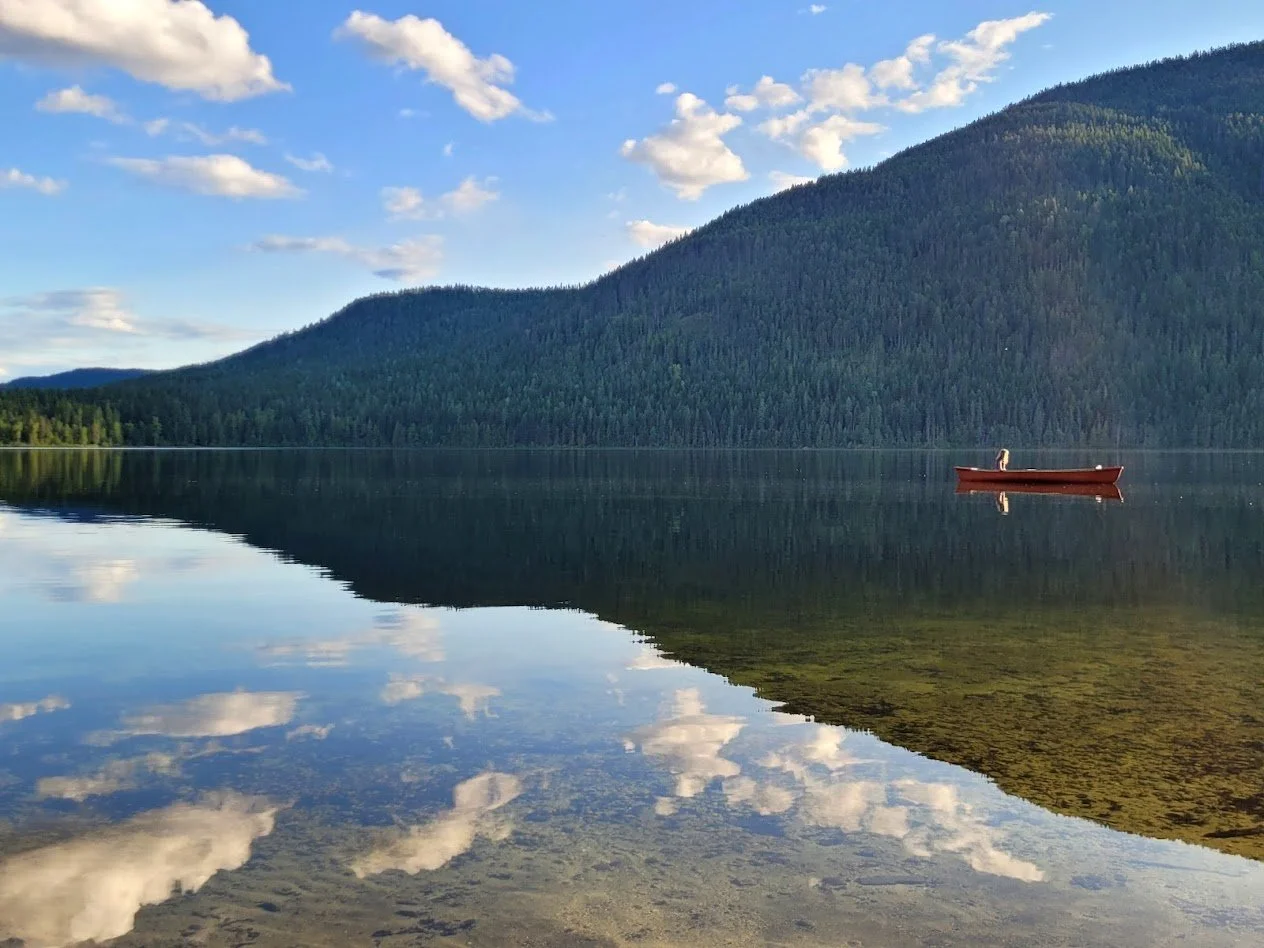
The space to just be.
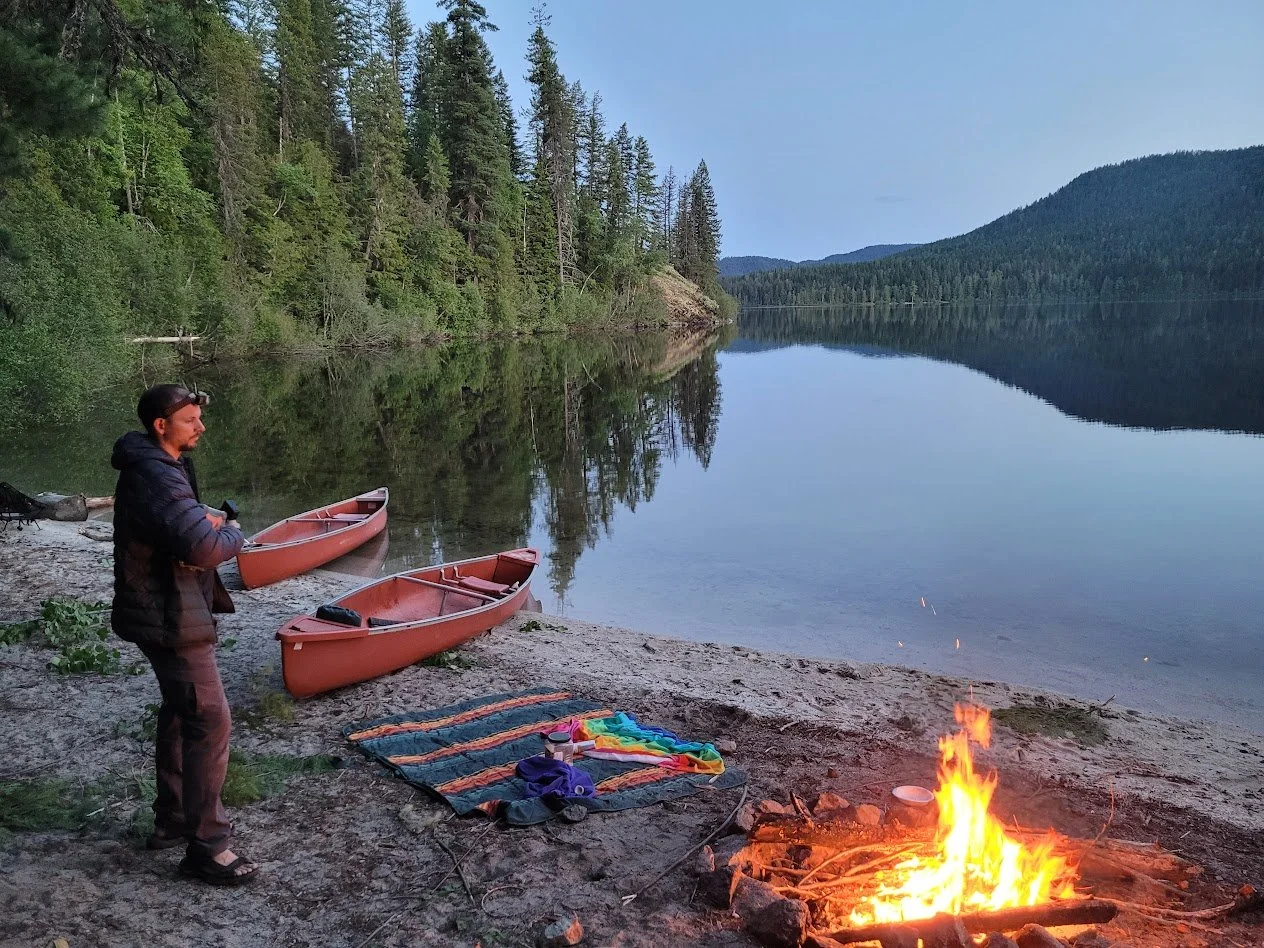
Evening stillness.
There are no roads to Upper Priest. Hence, this place is magical in its remote beauty and pristine wilderness. While the mosquitoes were persistent, the gorgeous array of June wildflowers and the mountain landscapes surrounding the waterways more than made up for this mild annoyance. Because we went fairly early in the summer season, we had the whole lake almost entirely to ourselves. The sheer absence of any human sound was a constant reminder of how wild and undeveloped this place is. It is a beautiful thing to visit places on this earth where you can hear no sounds of human civilization: no traffic, no voices, no planes or helicopters overhead, or trains. This experience is, in and of itself, a rich blessing.
The kids found some clay on the beach near our campsite, so we had fun fashioning various small creations that evening. Huckleberry had the fun idea of adding decorative leaf imprints to the clay as it dried. Before long, the girls had their own handmade bowls from which they were snacking on trail mix.
Setting up camp continues to get more efficient and streamlined as the kids get older and we become more adept with our skills and our gear. One particularly pleasant aspect of a canoe trip, I found, is that gear is much easier to organize and access from a plastic tote than it is from a backpack! You also have the flexibility to bring bulky and heavier items, such as sausages to roast over the fire, fresh fruit, and vegetables.
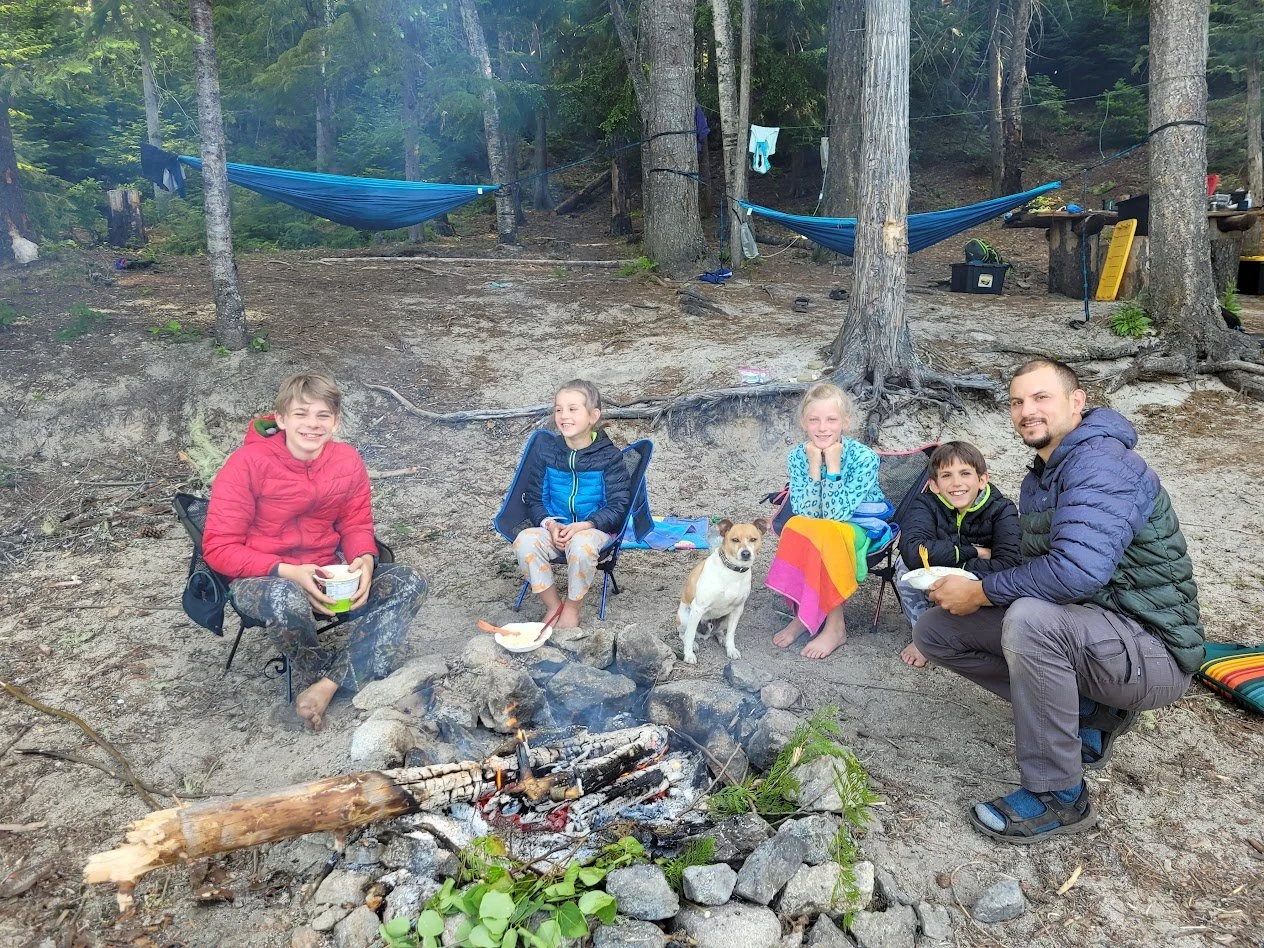
Sore muscles, happy hearts.
Further Explorations
On Tuesday morning, we broke camp and packed our gear back into the boats, ready to explore more of this rugged territory. We paddled north into the wind, which grew quite strong as we moved into deeper waters, making our progress slow. This was especially difficult for Ridge, as one of our canoe paddles broke the evening before, so he was rowing singlehandedly from the stern. A canoe can be tricky for one person to maneuver even in calm waters, but windy conditions and rough waters exacerbate this.
We strained against the choppy swells until we finally came into a small bay with an inviting stretch of sandy beach. Upon further inspection, we found an established campsite with multiple campsites, a rustic bushcraft table, and a rocky fire pit on the sand. A beautiful patch of purple and blue lupine inspired us to name this tiny cove “Lupine Bay.” The girls and I pitched the tents while Ridge made lunch, and the boys strung up their hammocks nearby in the trees. We all jumped in the lake for a refreshing cooling off; the water is still quite cold in June, but it felt amazing.
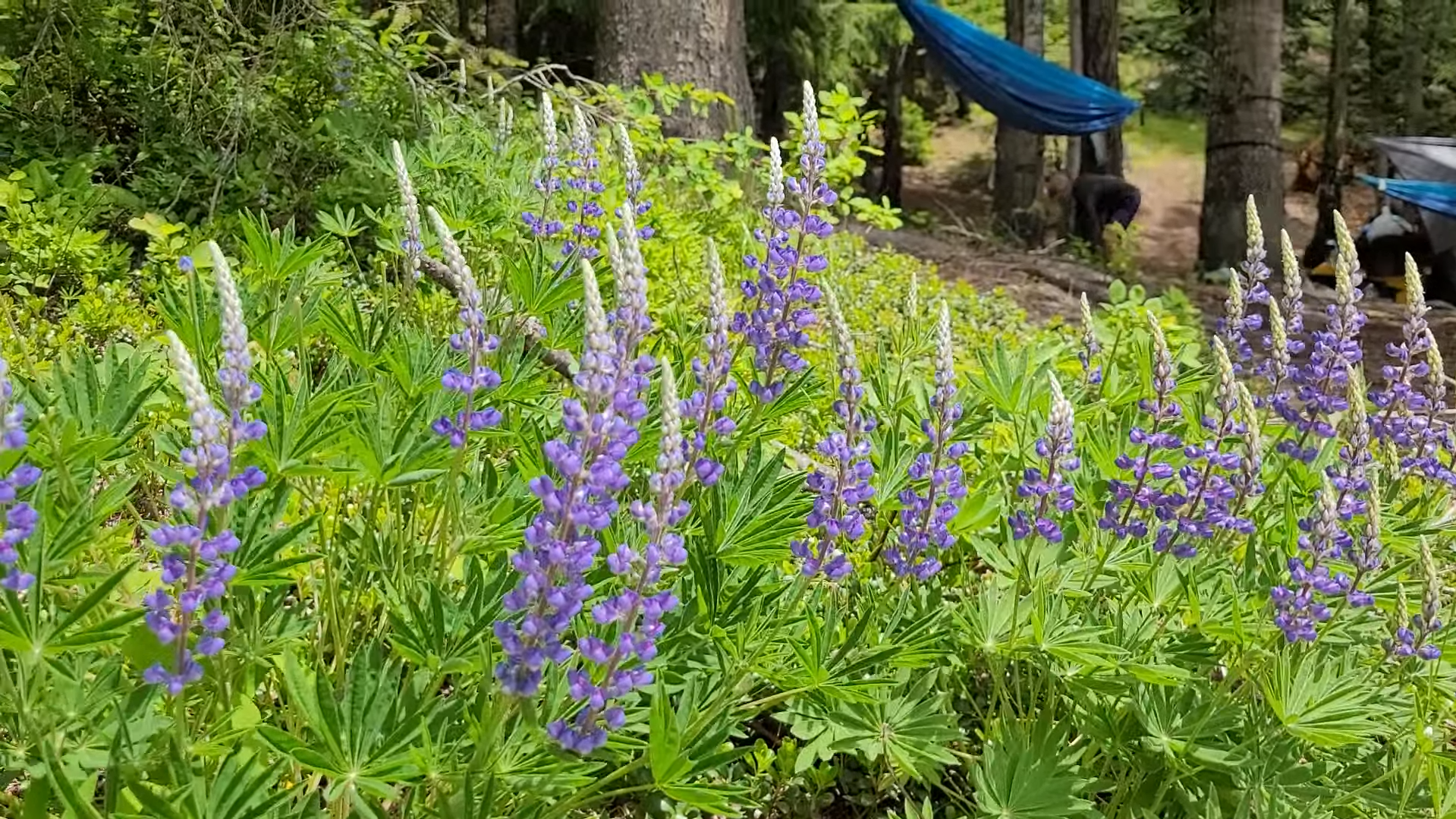
Our second campsite in “Lupine Bay.”
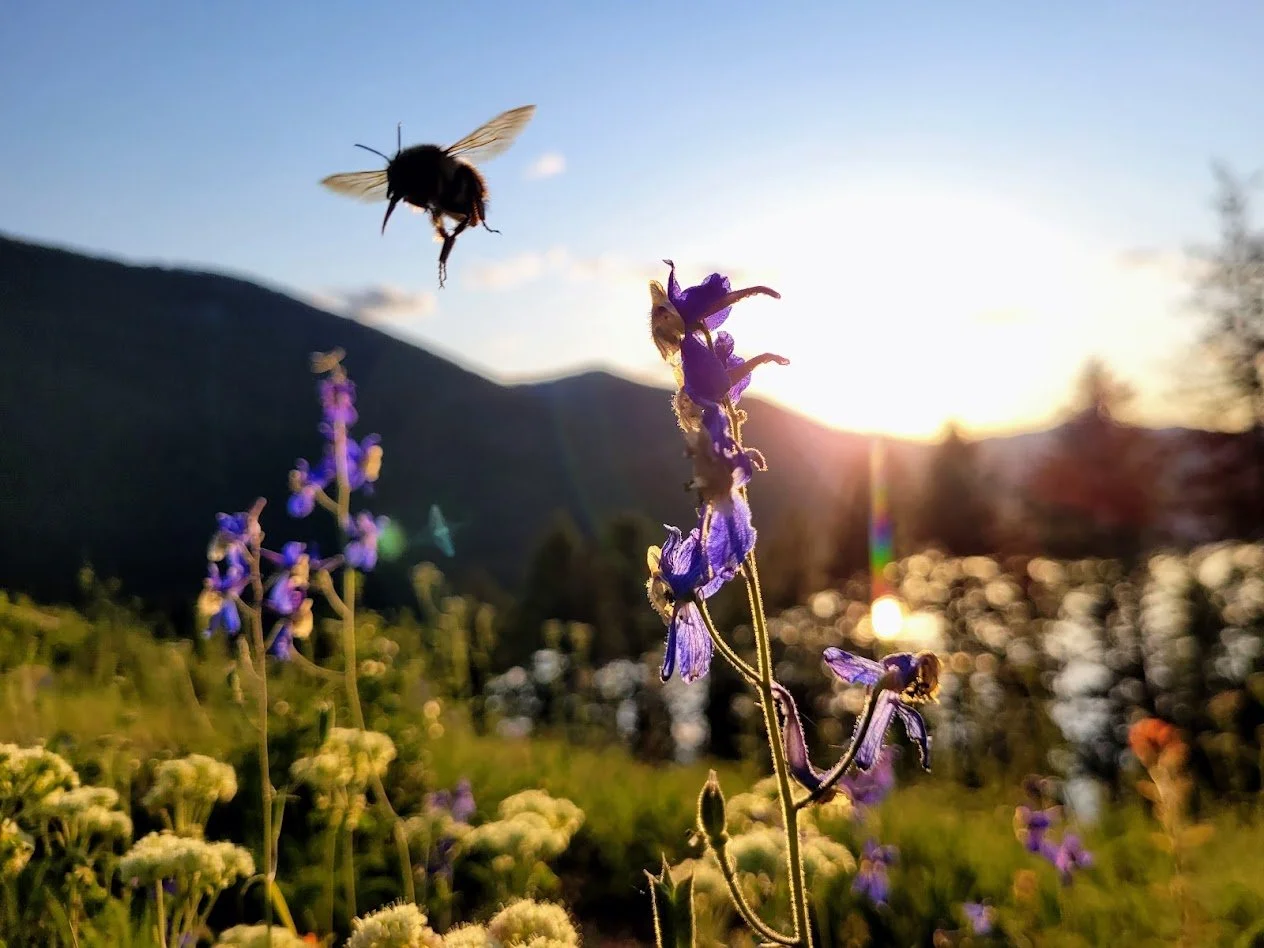
God’s handiwork on display in both the flora and the fauna.
It was a slow afternoon, that perfect blend of steaming camp coffee, sand in your toes, and a journal to write in. We roasted sausages over the fire just a few feet from the water’s edge. The kids putzed around in the canoes, keeping to the shallows. Tacklebox threw in a line for half an hour or so, but he didn’t catch anything. Judging from all the ripples on the water’s surface, they were hungry for bugs, not his bait.
That evening, we climbed a rocky knoll above our campsite to watch the sunset over the lake. It was so serene, sitting in utter silence and watching a pair of ospreys drifting back and forth over the waters, hunting for a fish dinner. The entire knoll was covered in an array of wildflowers; Indian paintbrush, larkspur, Harebell, and yarrow. We finished off the day with s’mores around the campfire and some peaceful reading time.
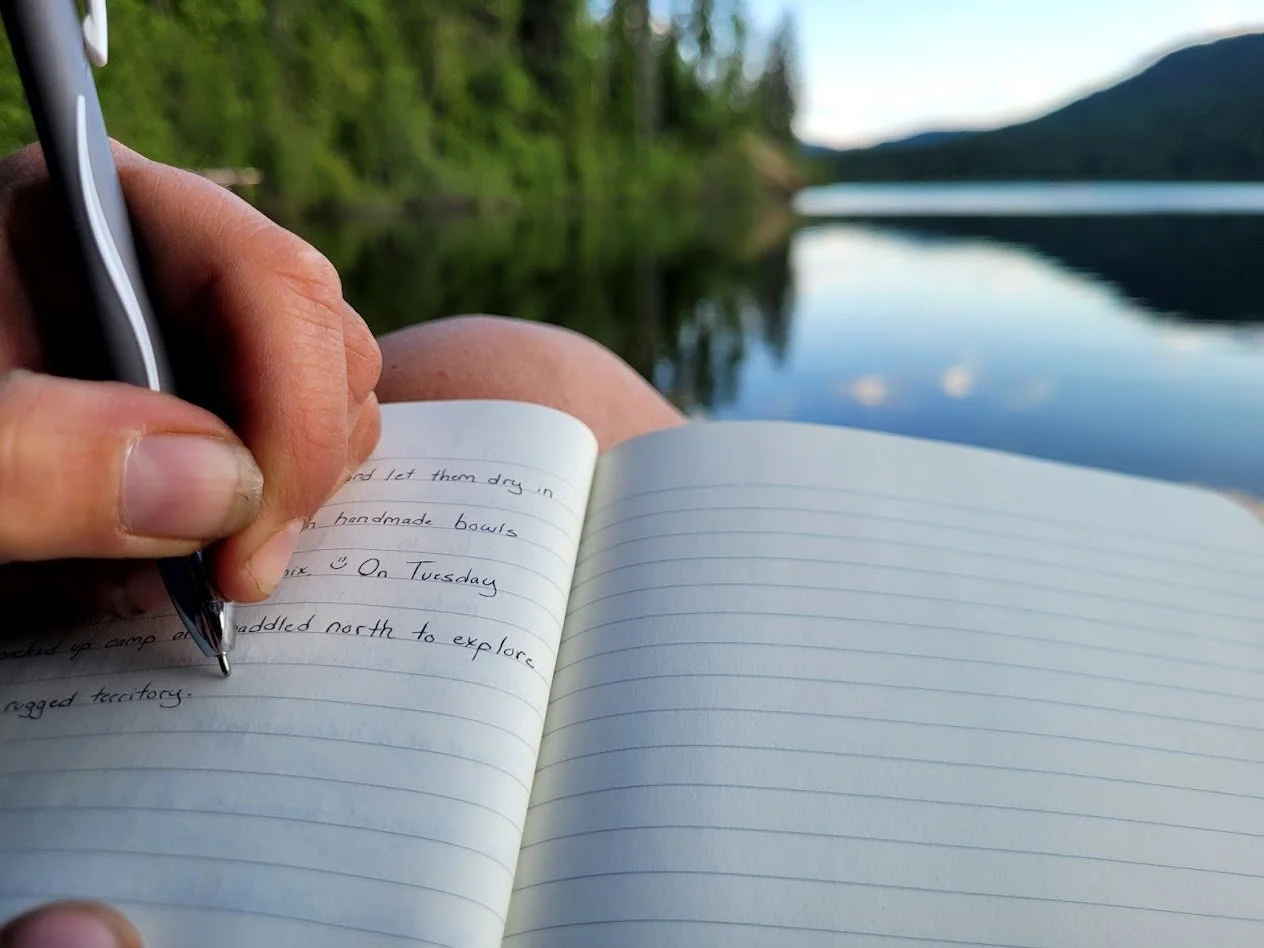
Journaling at the shoreline.
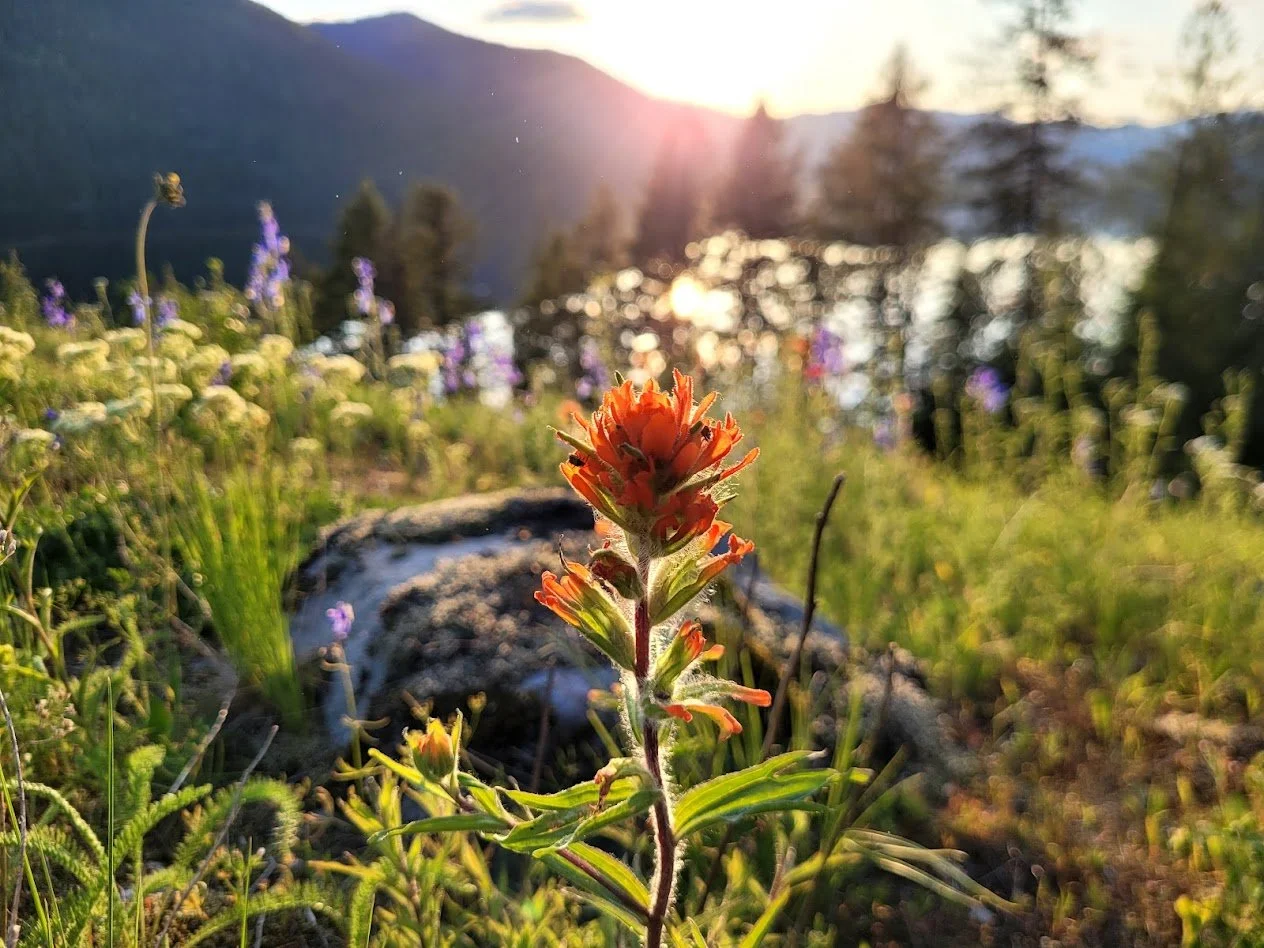
Indian paintbrush at sunset.
A Hard Row Home
On the third day, we enjoyed a leisurely breakfast and then broke camp. Our canoes fully loaded with all our gear, we pushed off and paddled further north. Our muscles were adjusting to the work of rowing, and the oar felt familiar and natural in my hands as Mountain Heart and I led the way, curious to explore some sandy beaches off in the distance. These proved to be picturesque campsites just like the one we had left, with amazing views and great tent sites. We were now not far from the northern end of the lake, and it was tempting to continue to push to the far end. However, the wind had shifted directions from the day before, and it was now blowing north. Ridge and I agreed it was best to turn south and head back the way we had come. We both knew it was going to be a grueling paddle back to the channel, as the wind continued to increase in intensity.
That final day was a test of endurance and tenacity for all of us. Mountain Heart and I donned our shade hats, kept water and snacks nearby, and bent to our work. She took frequent breaks, and I quizzed her on her times tables to help pass the time. On this day, I really tried to focus more specifically on my technique, using my torso and legs for power instead of relying only on my arms. This made us much more efficient as we cut through the waves, aiming to keep the bow of the canoe pointed steadily at the channel.
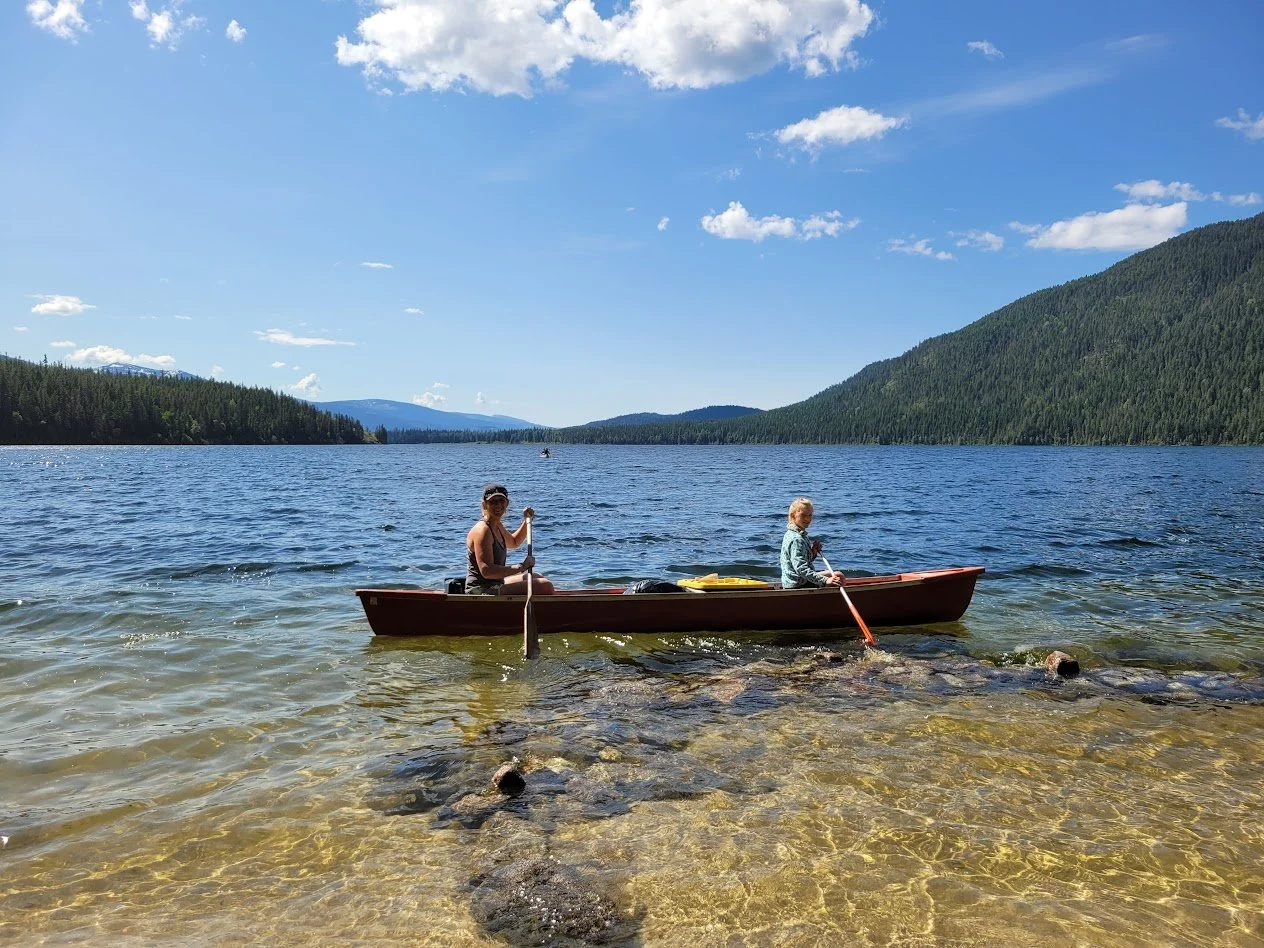
Exploring the northern shores of Upper Priest.
Finally, we made it back to our first campsite at the southern end of the lake, and we came ashore for a lunch break. Everyone was relieved to paddle into calmer waters when we entered the channel, where the slow current pushed us south. The final test of our fortitude came when we reached the end of the channel and had to cross open water in Lower Priest to make it back to the boat launch.
When Mountain Heart and I came around the corner of the jetty, we were suddenly confronted with huge, three- to four-foot swells. For a moment, my heart raced as I paddled hard to get our canoe turned into the wind. If you get sideways to a strong wind or current in a canoe, that is the fastest ticket to capsizing. Thankfully, we worked as a team to turn the bow, and we rowed hard on a diagonal line into the waves. Little by little, the boat launch shore loomed closer, and finally we enjoyed that satisfying sound of the hull scraping against the pebbly shore.
Ridge, Huckleberry, Fireblade, and Tacklebox soon joined us. Sore and sweaty, we loaded all our gear and boats back onto the truck and trailer. That was seven miles of rowing that day, the most any of us had ever completed in a single trip. Not surprisingly, half of the kids fell asleep in the back seat on the way home.
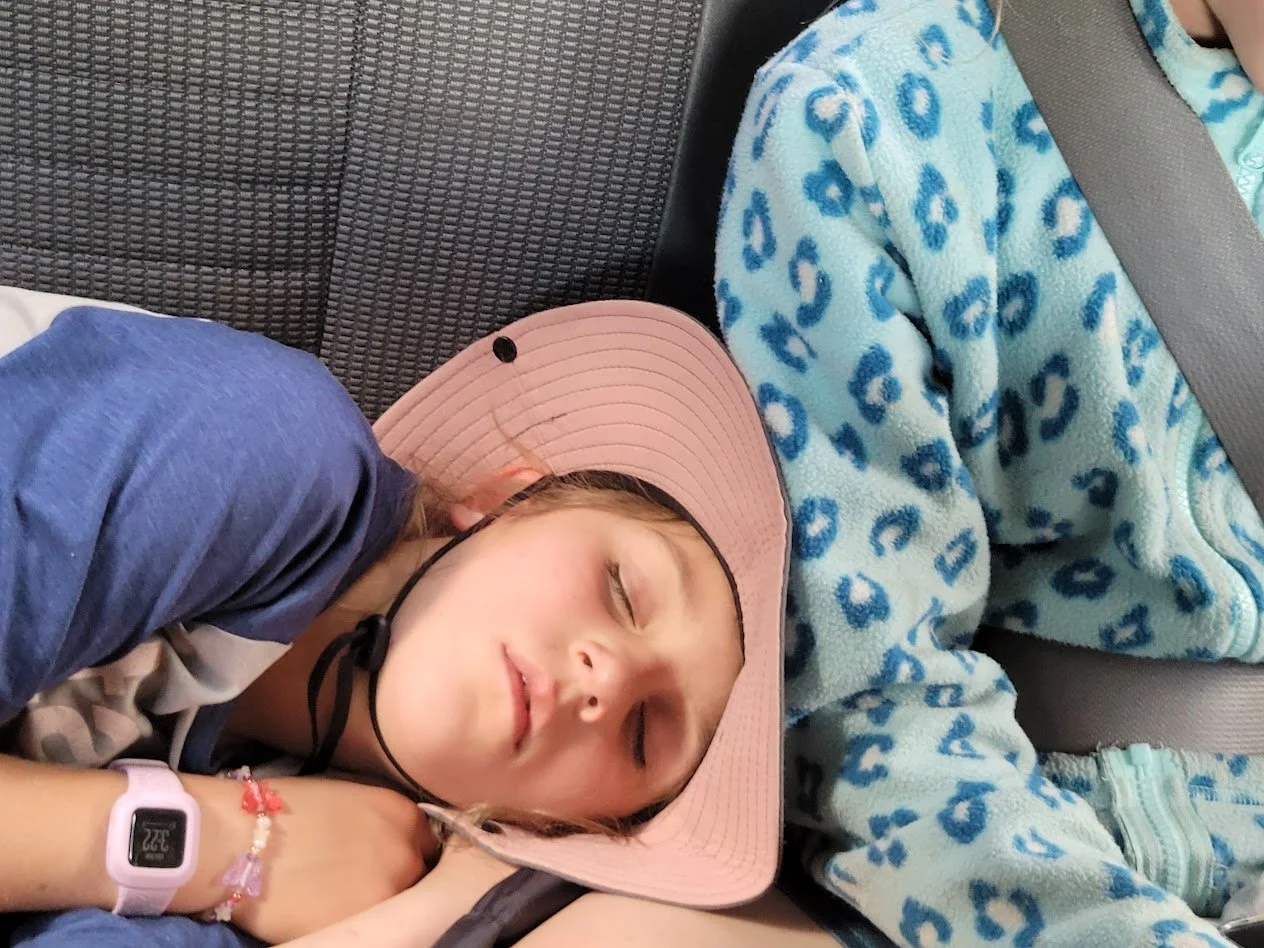
A rest well earned.
We spent the next few hours unpacking all the totes on our back deck, drying out all the gear, and resetting for our next adventure. We all agreed that one of the best aspects of the trip was the solitude and the wildness of Upper Priest. We live in a noisy, notification-filled world. This is one of those places that feels so remote and untouched by human civilization, you can almost imagine you’ve gone back in time two hundred years.
It’s safe to say this trip left us wanting to go back for more, and I suspect our family has many more canoeing adventures in our future.